The Hardiest Summer Blooms
I love a hydrangea. Truly, I think they’re one of the best values in floristry. If you care for them properly, they last for ages, and there’s something so satisfying about a big, blousy bloom that fills a space with generosity. In summer, I gravitate toward flowers that can withstand the heat without losing their poise — calla lilies, hydrangeas, Vanda orchids. Roses, of course, are eternal. They come in every imaginable shade and will never fall out of favor.
Clematis is another summer favorite of mine; it has a wild, romantic quality that feels so alive. But if I’m being practical, really good-quality hydrangeas — especially the green varieties or the more sculptural, pointy ones — are among the most reliable flowers to work with in hot temperatures. They’re robust, resilient, and visually impactful. A burst of green, wherever you place it, has the power to transform a space instantly. It’s fresh, grounding, and luxurious without trying too hard.

Favorite Flower of the Moment
It changes depending on the day and the season, but I’m a spring person at heart. Tulips, hyacinths, ranunculus — I adore them all. And butterfly ranunculus? I’m obsessed. They’re still relatively new to the commercial market, only a few years into being widely available, and they have this delicate, almost translucent movement that feels incredibly special.
I tend to fall for the harder-to-find blooms, the temperamental ones. The flowers that might not open in time. The ones that operate entirely on their own schedule. I like to think they have a bit of attitude — like me. There’s something thrilling about working with a bloom that keeps you on your toes. It’s a relationship. You nurture it, you coax it along, and sometimes you simply have to respect its mood. That unpredictability is part of the magic.

On “Filler” Flowers
I actually hate the term “filler flowers.” It feels dismissive, and no flower deserves that label. Every stem has a role to play. I’m not interested in using something simply because it’s fashionable or expensive. For me, it’s about intention and impact.
I love tulips, for example. Not tucked in as a secondary detail, but used en masse — thousands of them, creating a singular statement. If you’re going to commit to something, commit fully. There’s enormous power in repetition. A single variety, used abundantly, can be far more striking than an arrangement crammed with different elements fighting for attention.
The Freshest Palette for the Season
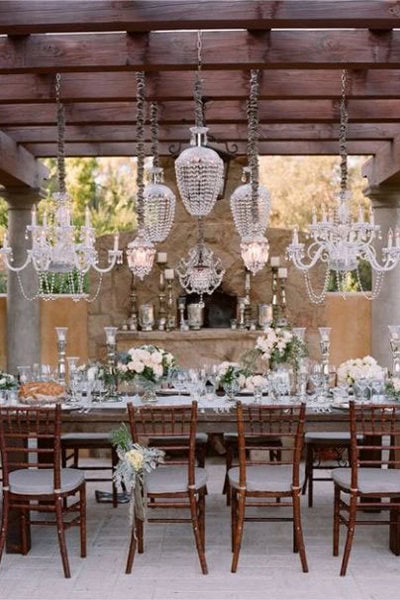
When I’m designing for a heritage building, I always begin with the architecture. I take my cues from frescoes, tapestries, aged stone, and gilded details. That often leads me toward soft, vintage tones — dusty pinks, mauves, taupes, cappuccinos, layered beiges. These palettes feel timeless and incredibly elegant.
I’m careful with crisp white in historic spaces. In a setting like Hampton Court Palace or a centuries-old palazzo on Lake Como, there’s nothing stark or “spic and span” about the room. Introducing bright white can unintentionally highlight the building’s age. But when you lean into off-whites and warm, nuanced tones, you enhance the depth, warmth, and decadence of the space. It feels harmonious rather than imposed.
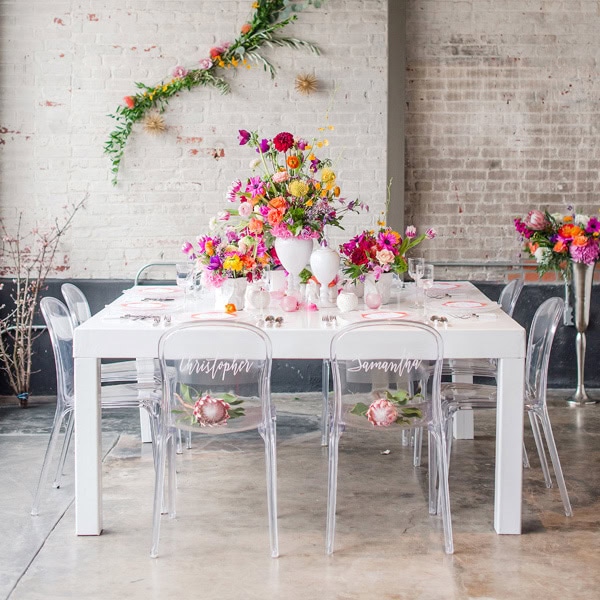
Outdoors, white is eternal. It’s classic and undeniably beautiful. But I’m thrilled that more couples are becoming braver with color. Pastels for those who prefer refinement; joyful, saturated tones for those who want vibrancy — yellows, burnt oranges, terra-cottas. We’re moving beyond the predictable green-and-white formula. The rule book has been torn up. You can have anything you like, and that freedom is exciting.

Sustainable Floral Practices
We have to be honest: the events industry is not inherently sustainable. It’s resource-heavy by nature. But once we acknowledge that, we can start making meaningful changes.
One major shift for us has been reducing our reliance on floral foam. Whenever possible, we use metal infrastructures, wire mesh, water tubes, and bucket systems to construct our designs. We build frameworks that allow every stem to sit in a water source without resorting to foam. It requires more planning and engineering, but it’s a far more responsible approach.
Extending the Life of the Flowers
Sustainability doesn’t end when the event does. If flowers return to our studio in good condition — and many are happily taken home by guests — we repurpose them into bouquets and deliver them to local retirement communities and hospices. They get a second life, bringing joy to someone new.
We also look at design strategically. Can ceremony flowers be moved to the reception? Can installations be reimagined for another moment during the celebration? I’m a big advocate of reuse — my only rule is that a guest can’t see it happening. The magic must remain intact.
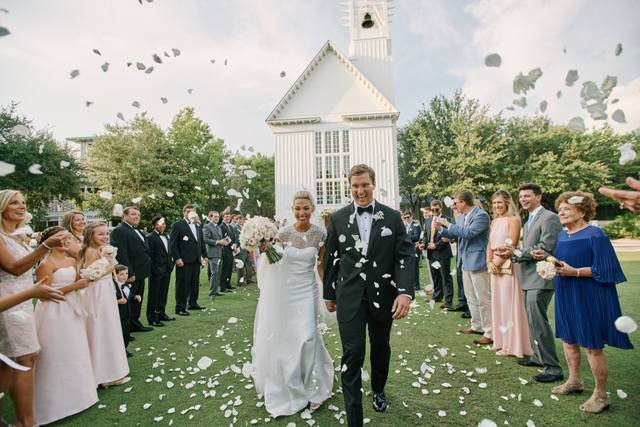
In London, we work with the London Confetti Club, who collect roses from our events and transform them into real petal confetti, with proceeds going to charity. It’s a beautiful example of extending a flower’s life cycle beyond a single evening.

Choosing the Right Floral Designer
When selecting a floral designer, the most important thing is connection. Yes, vendors need the practical details — the date, the venue, the broad vision — but before any of that, there should simply be a conversation. The work we create is deeply personal. There needs to be chemistry, a shared energy. I often compare it to dating. We go on a little creative date, and afterward we both decide how we feel. If there’s alignment, the process will be extraordinary. If there isn’t, that’s perfectly fine too.
You may spend six to twelve months in regular contact with your florist. You need to like each other. I’m only going to get the very best out of you if there’s a dynamic that feels effortless and inspiring — and you deserve to feel exactly the same about me.
Explore more: